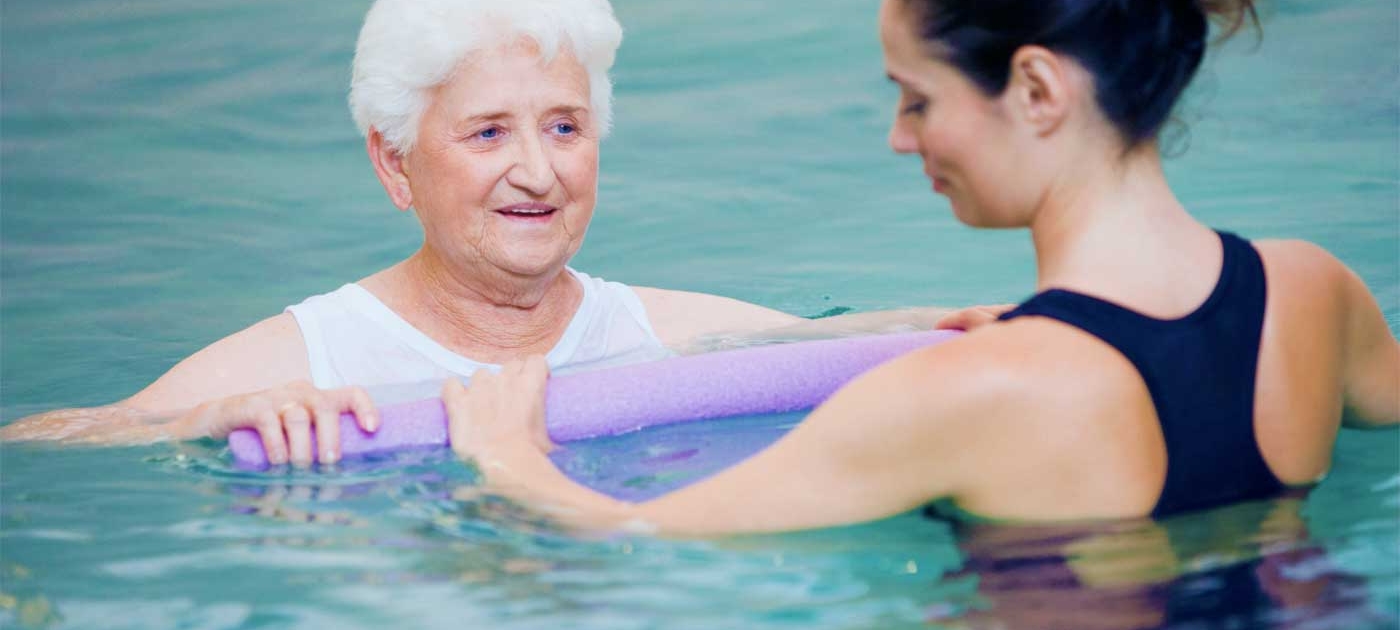
Hydrotherapy
The Four Principles of Hydrotherapy
Hydrotherapy is based on a small number of key bio-engineering principles that make exercise in water both effective and safe. These principles shape how hydrotherapy programmes are designed and why they work so well for rehabilitation, pain management, and movement retraining.
- Buoyancy
Water supports body weight, reducing the load on joints, muscles, and the spine. This allows people to move more freely and with less pain than on land, making exercise possible even when weight-bearing is difficult or unsafe. - Resistance (Drag and Inertia)
Water naturally resists movement. This resistance strengthens muscles, improves control, and allows exercise intensity to be adjusted simply by changing speed, direction, or surface area — without the need for heavy equipment. - Hydrostatic Pressure
Water applies gentle, even pressure to the body. This helps support joints, improve circulation, reduce swelling, and increase body awareness and stability during movement. - Thermal Effect (Specific Heat of Water)
Warm water relaxes muscles, reduces muscle spasm, eases pain, and increases blood flow, making movement more comfortable and helping the body prepare for exercise and recovery.
Together, these principles create a supportive, low-impact environment that enables safe movement, functional rehabilitation, and improved confidence for people with a wide range of physical needs.